
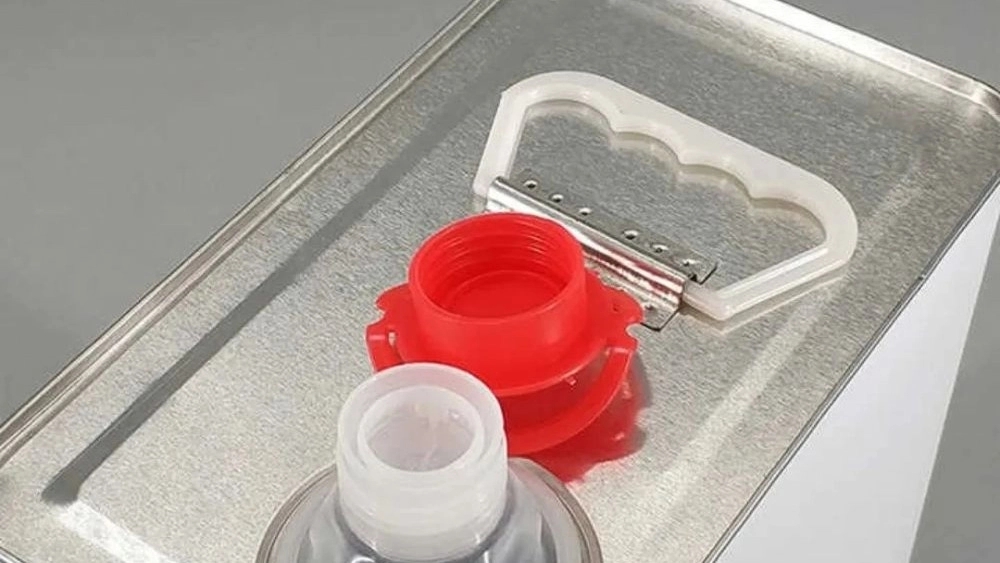
Metal can is considered one of the most important and oldest packaging methods in the world. This type of packaging is widely used in various industries due to its high resistance, long shelf life and ability to protect materials.
Today many industries such as:
- Paint and coating industries
- Resin and glue industries
- Motor oil producers
- Chemical industries
- Food industries
- Luxury packaging industries
They use standard metal cans to supply their products.
In today's competitive market, just producing a simple metal can is not enough. Manufacturers must produce a metal can with a completely smooth surface, without lines, without waves and without additional signs, to enable printing, labeling and exporting the product.
For this reason, the production of high quality metal cans has become one of the important parts of the packaging industry in the world.
If you are also active in the field of production or packaging, choosing a standard and professional metal can can have a direct impact on your sales and brand reputation.
History of metal can industry in the world
The beginning of the metal can industry in the 19th century
The first examples of metal cans were produced in Europe in the early 19th century. The primary purpose of making these cans was to store food for the armies.
At that time, metal cans were able to revolutionize the food preservation industry because:
- Increased the durability of food
- Prevented the penetration of air and moisture
- Made transportation of food easier
These advantages made the metal can spread quickly around the world.
Expanding the use of metal cans in various industries
In the 20th century, with the development of chemical and industrial industries, the use of metal cans became much wider.
During this period, manufacturers used metal cans to package the following materials:
- Industrial paints
- Resins
- Thinner
- Motor oil
- Industrial adhesives
At the same time, different types of cans such as:
- One liter can
- Four liter can
- Quarter can
- Square metal can
were introduced to the market.
Metal can industry in modern times
Today, the production of standard metal cans has become an engineered industry.
The world's major manufacturers are trying to produce cans that:
- It has a completely smooth surface
- No waves or lines can be seen on the body
- There is no welding or mold effect left on the body
- It is suitable for direct printing and labeling
- It has a high resistance to pressure and impact
For this reason, the production of smooth and uniform metal cans is considered one of the most important standards of the packaging industry in the world.
The production process of metal cans is smooth and without lines
To produce a high quality metal can, different steps must be done with high precision. Each of these steps has a direct impact on the final quality of the product.
1. Selection of standard metal sheet
The first step in the metal can production is choosing the right sheet.
Usually two types of sheets are used:
- coated tin sheet
- oiled sheet
The thickness of these sheets is different depending on the type of can.
For example:
The quality of the metal sheet has a great effect on the smoothness of the surface of the metal can.
2. Precise cutting of sheet metal
In the next step, the sheets are cut with automatic cutting machines.
At this stage you should:
- Edges should be completely smooth
- No waves or breaks on the sheet
If the cutting is not accurate, in the next steps the metal can will have lines and waves.
3. Forming the body with CNC molds
One of the most important steps in metal can production is shaping the body.
At this stage:
- Metal sheet is bent
- Can body is formed
- Body lock is created
CNC machines help to make the body of the can perfectly accurate and uniform.
This step has a direct effect on the smoothness of the metal can surface.
4. Welding of the can body
After the body is formed, the edges of the can are connected with resistance welding.
In the professional production of metal cans:
- The welding effect should be very little
- The surface of the body should remain completely smooth
This issue is very important in printing on metal can.
5. Production of can lids and bottoms
After producing the body, it is time to make the metal can lid and bottom.
For example:
- In a fully empty can, the design of the lid is such that the contents inside the container are completely removed.
- In a four liter can, the lid must have high resistance.
6. Final assembly of the metal can
In the final stage, the body, bottom and lid of the can are assembled with automatic machines.
At this stage it should be checked:
- The can has no leaks
- The body is completely smooth
- The can surface is ready for printing
This step determines the final quality of the export metal can.
Safety standards in the production of metal cans
The metal can making industry requires strict compliance with safety principles due to the use of cutting, pressing and welding devices.
The most important safety standards include the following:
- Use of anti-cut gloves
- Use of safety shoes
- Resistant industrial work clothes
- Hand protection in press machines
- Proper ventilation in the welding environment
- Full training of machine operators
- Use of emergency stop system
Compliance with these principles increases the safety of employees and improves the quality of metal can production.
The most widely used types of metal cans in the market
In the market of Iran and the world, various types of metal cans are produced, each of which has its own use.
A four-liter can
Four liter can is one of the most widely used types of metal cans in different industries.
Uses:
- Construction paint
- Resin
- Thinner
- Motor oil
- Industrial glue
Due to its suitable capacity, this type of metal can has the most demand in the market.
One liter can
One liter metal can is used for packaging smaller products.
Uses:
- Paint
- Thinner
- Resin
- Light chemicals
This type of can is very common in paint stores.
Quarter can
Quarter metal can is used for low-volume packaging.
Like:
- small paints
- glues
- special chemicals
Aleppo Square
Square metal can is one of the most widely used types of packaging in the food and industrial industries.
Uses:
- Edible oil
- Industrial oil
- Grease
- Foodstuffs
This type of Aleppo is very popular in export.
Aleppo is completely evacuated
The full discharge hopper is designed for thick materials.
Like:
- glue
- resin
- heavy chemicals
The design of this can makes the contents inside it empty completely.
Hardware box
Hardenary can is designed for strong chemicals.
This type of can has:
- Thicker body
- High resistance
- Tolerance of corrosive materials
is.
Fancy can
Fantastic metal box is mostly used for luxury packaging.
Uses:
- Gift packaging
- Special food industries
- Promotional products
Why is a smooth metal can without lines important?
In the modern packaging industry, product appearance is very important.
A smooth and uniform metal can has many advantages:
- Possibility of high quality printing
- Professional appearance of the product
- Increasing customer trust
- Suitable for export
- Increasing brand value
For this reason, professional manufacturers are looking for metal cans without waves and without lines.
summary
Metal can is one of the most important packaging tools in different industries of the world. From the paint and resin industries to the food and chemical industries, everyone needs standard and resistant packaging.
Among the different types of cans:
- Four liter can
- One liter can
- Quarter can
They are mostly used in paint and chemical industries.
On the other hand, square milk and full drain milk are mostly used in food and industrial industries.
Finally, the production of smooth metal cans, without lines and without additional marks is one of the most important quality criteria in the modern packaging industry.
If you are looking to buy or order the production of high quality metal cans, choosing a professional manufacturer can have a great impact on the quality of the package