
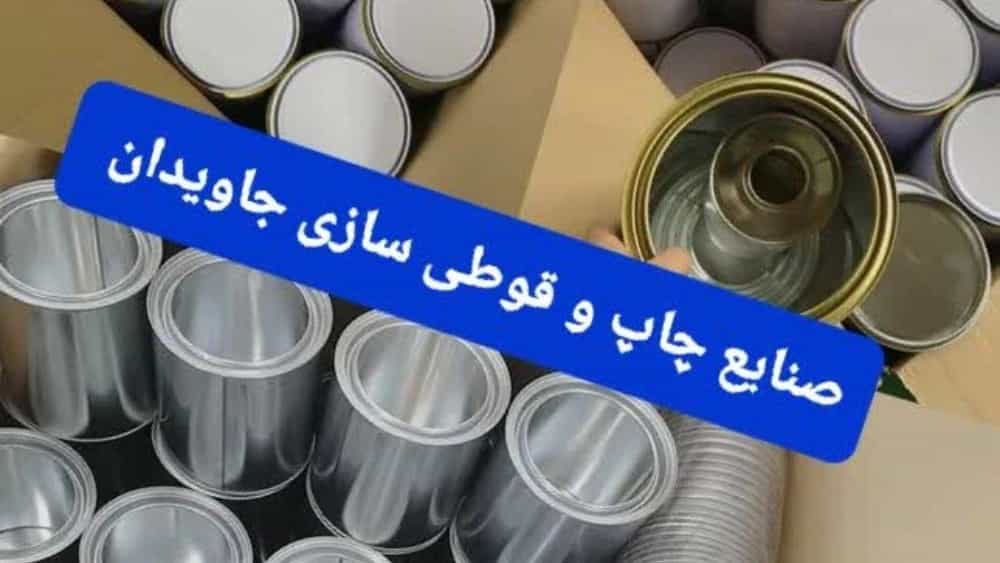
In today's competitive market, packaging is not just a cover to store the product; Rather, it is an important part of customer experience, brand identity, product safety, and even business profitability. Choosing between types of packaging, including plastic, glass and metal, should be done according to the type of product, transportation conditions, required shelf life, brand strategy and environmental considerations.
Meanwhile, metal can has a special place in various industries due to its mechanical strength, excellent protection against light and oxygen, high quality printing and high recyclability. From canned food and beverages to paint, oil, chemicals, pharmaceutical products and luxury goods, they can all benefit from metal packaging.
In this article, we examine the characteristics of metal cans, the difference between aluminum and tinplate, the effect of graphic design, hygiene requirements, transportation challenges and the role of this industry in the circular economy.
Why is metal can important for product packaging?
Metal can is a resistant and multi-purpose package that can protect its contents from harmful environmental factors. Light, oxygen, humidity, impact and temperature changes are among the factors that may reduce the quality of food, pharmaceutical or chemical products.
Metal packaging, especially in the case of standard design and production, creates an effective barrier against these factors. This feature is very important for products that are sensitive to light and air. For example, many foods contain fat, oil or compounds sensitive to oxidation, and their long-term contact with oxygen can change the taste, smell or quality of the product.
On the other hand, the resistance of the metal can body allows the contents to be better protected during transportation, arrangement in the warehouse and supply in the store. For this reason, this type of packaging is a reliable choice for products that have a long distribution path or more difficult transportation conditions.
Advantages of metal cans compared to plastic packaging
The comparison of metal and plastic cans is not limited to the initial cost of production. Each of these packages has its own characteristics, limitations and applications. However, in many products, metal can provide important technical and marketing advantages.
The most important advantage of the metal can is to create a very effective barrier against light, oxygen and moisture. Unlike some polymers, which may have some permeability in the long term, metal provides more product protection if properly sealed. This issue helps to increase the shelf life and maintain the quality of the product.
Also, metal packaging is more resistant to pressure and impact. Of course, a metal can can also be dented due to a strong impact, but usually its structure is more resistant than many plastic packages and protects the contents better.
From a marketing point of view, a metal can often conveys a sense of quality, authenticity and higher value to the customer. Many consumers consider the product supplied in metal packaging to be more professional, high-quality and suitable for gifting or long-term use. This mental perception can help brands to offer their product in a more privileged position in the market.
Comparison of aluminum and tinned steel in the production of metal cans
In the production of metal cans, two widely used materials are aluminum and tinned steel. The choice between these two options should be made based on the type of product, the shape of the packaging, the production process, the storage conditions and the economic purpose of the brand.
Aluminum can
Aluminum is one of the popular materials for producing cans due to its light weight, natural corrosion resistance and modern appearance. This metal is mostly used in the packaging of drinks, sprays, cosmetic products, special food and luxury goods.
One of the main advantages of aluminum is its lightness. Reducing the weight of packaging can reduce transportation costs and fuel consumption in the distribution chain. Also, the proper heat transfer of aluminum makes products such as drinks cool down faster.
Aluminum has a good malleability and allows the design of modern and diverse cans. However, the cost of raw materials and metal market fluctuations can affect the final price of this type of packaging.
Tinned steel can
Tinplate steel, due to its high strength and wide application in the food industry, is one of the common options for the production of cans, paste, compote, dry food, paint and industrial products.
Tin coating on steel helps increase corrosion resistance. In addition, the use of suitable interior varnish prevents the possible reaction of the product with the metal surface. Tinned steel performs very well in terms of mechanical resistance and is considered a practical option for products that require thermal processing, sterilization or long-term storage.
In general, if the business priority is low weight, modern appearance and corrosion resistance, aluminum can be a good choice. But if physical resistance, industrial application and usability in thermal processes are more important, tinned steel will be a reliable option.
The role of internal varnish in the safety of metal cans
One of the most important components of a standard metal can is its inner coating or varnish. This protective layer is placed between the metal body and the product to prevent direct contact of the contents with the metal.
In food packaging, choosing the right internal varnish is particularly important; Because products such as pastes, pickles, acidic substances, oils and some drinks may react with the metal surface. The right varnish can prevent taste change, color change, internal corrosion and reduction of product quality.
Today, the use of BPA-free or BPA-NI coatings has been considered in many sensitive applications. Of course, choosing the type of internal coating should be done based on the nature of the product, processing temperature, shelf life and technical requirements of the target market.
Therefore, the production of high-quality metal cans is not only limited to choosing the right sheet; Moreover, the precise design of the internal varnish, the type of door, the quality of sealing and the control of the production process also play a decisive role in the final safety of the packaging.
Effect of graphic design of metal can on customer's purchase decision
The metal can is a suitable surface to display the visual identity of the brand. In stores, the customer first sees the product's packaging before trying it. For this reason, professional graphic design can play a direct role in attracting attention, building trust and increasing the likelihood of purchase.
Printing on metal cans allows the use of metallic colors, glossy and matte effects, embossing, special textures and fine visual details. These features make the product more visible on the store shelf and differentiate it from its competitors.
One of the popular trends in metal packaging design is the use of minimal design. In this style, empty space, limited colors, readable typography and subtle details are combined with metallic or shiny effects. Such designs usually convey a sense of modernity, quality and trust.
Smart use of color is also very important. Contrasting colors can make a product stand out on the shelf, while matte and natural colors are often suitable for brands with a sustainable, organic or luxury approach. The design of the metal can should be in harmony with the target audience, brand position and product type.
Transportation and logistics challenges of metal cans
Transportation management is very important in the canning industry; Because empty cans usually take up a lot of space, and if they are arranged or moved improperly, they may be damaged.
Denting of the body, damage to the edges, scratches on the print and deformation of the door are among the problems that can affect the appearance quality and performance of the packaging. In order to reduce these risks, it is necessary to use standard pallets, cardboard or polymer protective layers, and basic load restraint methods.
Optimizing the dimensions of the carton and the arrangement of the cans can also reduce logistics costs. In some models, the design of the can is done in a way that allows for a more compact or nested arrangement. This helps to better use the space of the truck, reduce the number of trips and better manage the cost of transportation.
Controlling warehouse conditions is also important. High humidity, dust, extreme temperature fluctuations and long-term storage can affect the appearance of cans or unprotected edges. For this reason, basic warehousing and the implementation of a suitable inventory management system are an important part of the metal packaging supply chain.
The role of timely production in reducing damage and storage cost
Using a production and delivery system on time or Just in Time can help businesses in the canning and filling industry to better manage their inventory.
In this method, the cans are supplied based on the actual production schedule and the filling line's needs. As a result, the time of storing empty cans in the warehouse is reduced and the possibility of physical damage, occupying a lot of space and storage costs are reduced.
The successful implementation of this model requires careful coordination between the can manufacturer, the printing unit, the supplier of raw materials, the transport fleet and the filling plant. Any delay in this chain may stop the production line; Therefore, capacity planning and safe inventory management are still essential.
Metal cans and moving towards a circular economy
One of the most important environmental advantages of metal packaging is its high recyclability. Metals can be re-entered into the production cycle after being collected and melted into new products. This capability has made the metal can a valuable option in the development of circular economy.
A circular economy is a model that focuses on reusing resources, reducing waste, and preserving the value of materials instead of producing, consuming, and discarding. In this model, metal packaging can be recovered as a secondary raw material after consumption.
On the other hand, manufacturers can reduce the consumption of raw materials by using technologies such as reducing the thickness of the sheet without a noticeable drop in packaging performance. This approach, known as simplification, helps reduce packaging weight, optimize transportation, and reduce resource consumption.
How to choose the best metal can for your product?
Choosing the right metal can should be done based on a set of technical, economic and marketing factors. Before ordering production, it is necessary to answer the following questions:
- Is the intended product food, pharmaceutical, chemical, or industrial?
- Are the contents of the product acidic, oily, sensitive to light, or sensitive to oxygen?
- Does the product require a heat process or sterilization?
- What is the expected durability of the product?
- Should the packaging have a luxurious appearance or is the main focus on mass production?
- What are the conditions of transportation and distribution of the product? Is it?
- What type of print, color, cover and appearance is more suitable for the brand identity?
Answers to these items determine the path of material selection, sheet thickness, inner lacquer type, can form, lid type and printing design. Cooperation with a manufacturer that has the ability to provide technical advice and strict quality control can avoid costs caused by incorrect packaging choices.
summary
metal can is a professional solution for brands that care about product safety, durability, strength, attractive appearance and recyclability. This type of packaging can maintain the quality of the product from production to consumption by providing proper protection against light, oxygen and physical damage.
Aluminum and galvanized steel each have their own uses and advantages, and the choice between them should be made according to the product features and business goals. Also, the use of standard interior varnish, professional graphic design, proper transportation management and attention to recycling all contribute to the success of a metal packaging.
Finally, a metal can is not just a container; Rather, it is a part of product quality, brand image, and business direction towards more sustainable packaging.